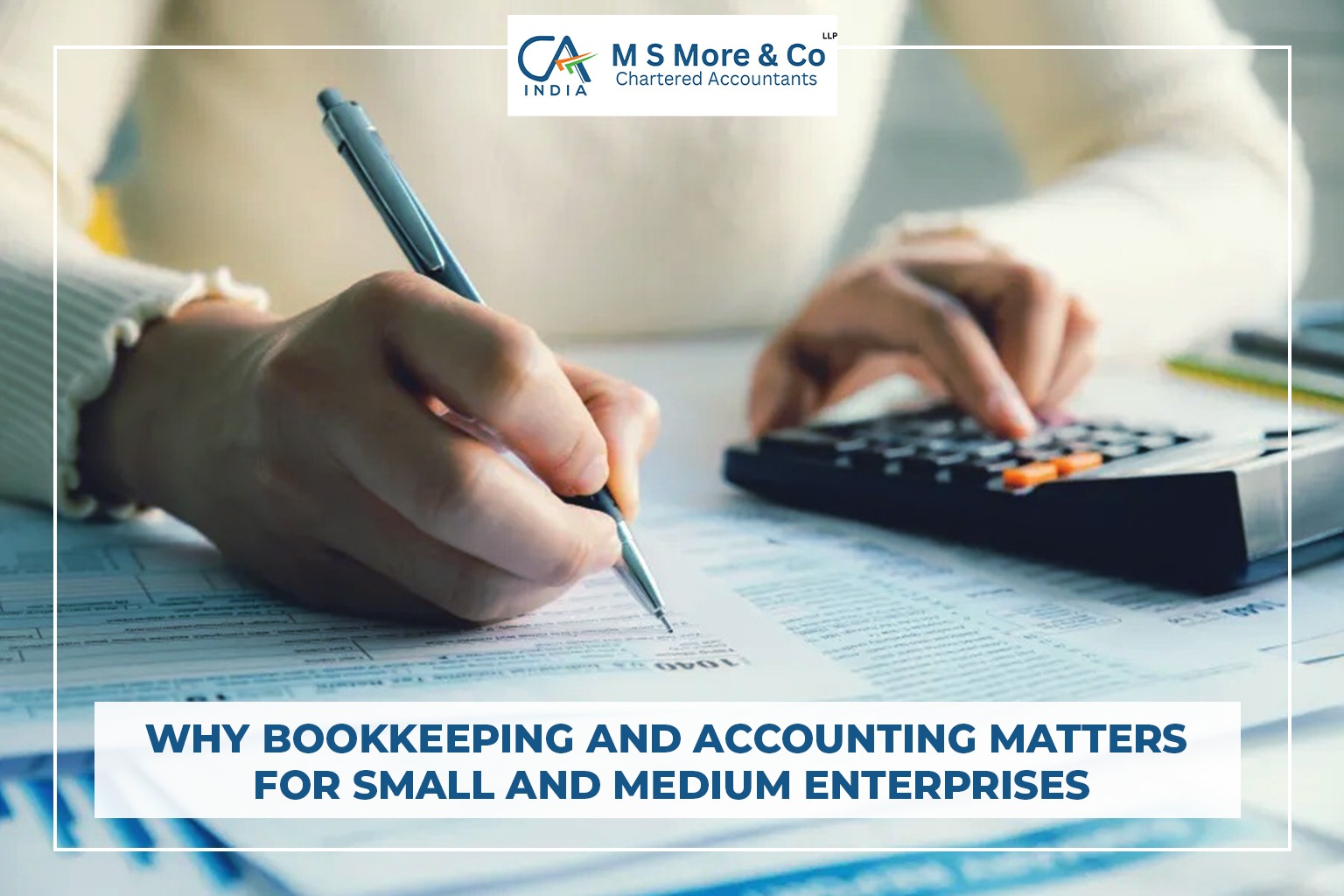

Running a small or medium enterprise (SME) is no easy task. Business owners often handle many roles at once—managing operations, keeping customers happy, growing sales, and leading their teams. In this busy routine, one important area often gets less attention than it deserves: bookkeeping and accounting.
Many entrepreneurs see it only as a tax or compliance requirement. But in reality, good bookkeeping and accounting go far beyond that. They form the financial backbone of every business and are essential for smooth operations and long-term growth.
1. Gives You a Clear Financial Picture
Accurate records show whether your business is making money or losing it. Bookkeeping tracks every rupee that comes in and goes out, while accounting organizes this data into reports like profit and loss statements or balance sheets. This clear picture helps you understand where your business stands at any point in time.
2. Working capital Management
Cash flow is the lifeline of any SME. Without proper tracking, it’s easy to miss payment deadlines or forget customer dues. Bookkeeping helps you stay on top of receivables and payables, ensuring you always know how much money is available for day-to-day needs and future plans.
3. Keeps You Compliant and Stress-Free
Every SME has to follow tax rules—be it GST, TDS, or income tax. Poor or incomplete records can lead to missed deadlines, incorrect filings, and unnecessary penalties. Good accounting ensures that your business remains compliant, making tax season less stressful.
4. Builds Trust with Banks and Investors
Whether you are applying for a loan, attracting investors, or negotiating with suppliers, having reliable financial records creates trust. Banks and investors want to see that your accounts are transparent and well-managed before they put in their money.
5. Helps You Make Better Decisions
Accounting is not just about recording the past—it helps you plan for the future. By analyzing income and expenses, you can identify your most profitable products or services, control unnecessary costs, and set realistic growth targets.
6. Prepares You for Growth
As your business expands, finances become more complex. Organized bookkeeping ensures that you can handle larger volumes, multiple customers, and new opportunities with ease. It also makes your business more attractive if you ever want to raise funds or sell it.
7. Protects Against Errors and Fraud
Keeping proper records reduces the chances of mistakes or financial leakages. For SMEs, even small unrecorded expenses or incorrect invoices can reduce profits. Regular accounting checks act as a safeguard against fraud or misuse of funds.
Final Thoughts Bookkeeping and accounting are not just about meeting legal requirements—they are about building a strong and sustainable business. For SMEs, they provide clarity, control, and confidence to make better decisions and grow steadily.
